
Main Courses
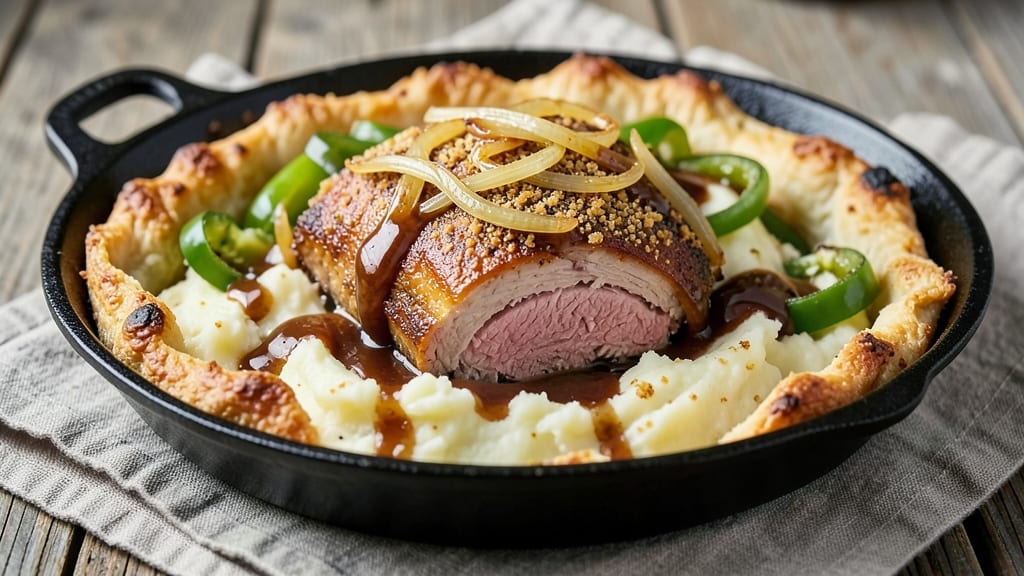
This rappie pie recipe with pork delivers the ultimate comfort food experience—smoky-spiced meat nestled in a golden potato crust that tastes like home. 💛 The secret lies in layering tender pork with cornmeal and vegetables, then sealing it all in a flaky, buttery potato crust that bakes to crispy perfection.
I first tried this recipe during a chilly winter weekend, and it became an instant family favorite that now graces our table every holiday season.
The magic happens in the crust—a mix of grated potatoes and flour that creates a tender yet sturdy shell, while the filling combines seasoned pork with cornmeal for that signature Southern texture.
Unlike traditional meat pies, the potato crust here isn’t just a wrapper; it’s the star, absorbing flavors as it bakes to a golden brown. This dish is perfect for feeding a crowd or saving leftovers for days—though I’ve never had any last that long.
What makes this recipe special is how it balances rich, savory pork with the earthy sweetness of the potato crust. The slow baking process ensures the pork stays juicy while the crust achieves that ideal crisp-tender texture.
Serve it with a simple green salad or steamed vegetables to balance the richness, and you’ll have a meal that feels like a warm hug on a plate.
This foolproof method ensures restaurant-quality results with minimal fuss—ideal for weeknight dinners or holiday gatherings. The best part? It’s a dish that improves with leftovers, making it perfect for meal prep. Let’s get started on creating this hearty, comforting classic that’ll have everyone asking for seconds.
Ingredients for rappie pie recipe with pork
Pork, potatoes, and pantry staples—this hearty pie needs just 13 ingredients for ultimate comfort.
| Ingredient | Amount | Notes |
|---|---|---|
| Pork Shoulder 🥩 | 2 ½ lb | Boneless, cut into bite-sized pieces |
| Russet Potatoes 🥔 | 3 lb | For crust, peeled and grated |
| All-Purpose Flour 🌾 | 1 cup | For crust binding |
| Cornmeal 🌽 | ½ cup | Fine grind for texture |
| Yellow Onions 🧅 | 2 whole | Diced, about 1.5 cups |
| Green Bell Peppers 🍃 | 2 whole | Diced, about 1.5 cups |
| Garlic Cloves 🧄 | 6 cloves | Minced, for filling |
| Unsalted Butter 🧈 | ½ cup | Cold, cubed for crust |
| Chicken Broth 💧 | 1 ½ cups | Low-sodium preferred |
| Smoked Paprika 🌶️ | 1 tbsp | For smoky flavor |
| Ground Black Pepper 🌶️ | 1 tsp | Freshly ground |
| Salt 🧂 | 1 ½ tsp | Kosher or sea salt |
| Large Eggs 🥚 | 1 whole | For crust binding |
The pork shoulder is non-negotiable—it stays juicy while the crust bakes. Costco or your butcher shop usually have it pre-cut for convenience. Look for pieces with good marbling for flavor. If you're prepping ahead, you can even brown the pork the night before and refrigerate it. The potatoes? Russets are your best bet—they grate fine and hold their shape. I always grab a few extra pounds to have on hand for other dishes too.
No smoked paprika? Regular paprika plus a pinch of liquid smoke works in a pinch. Fresh bell peppers are ideal, but frozen chopped peppers (no sauce added) save time. The cornmeal gives that signature Southern texture—don't skip it! For the crust, I like to use Diamond Crystal kosher salt because it dissolves better. Want to make it ahead? Assemble the pie, cover with foil, and refrigerate overnight for deeper flavors.
This pie tastes even better the next day—honestly, it's peak flavor after 24 hours in the fridge. Store leftovers covered for 4-5 days, or freeze portions for up to 3 months. I always make a double batch because it reheats beautifully. For serving, a simple side salad keeps the meal balanced. The crust gets crispy again when reheated, so don't skip that step!
Why You'll Love This Recipe
- One-Pan Magic: I swear by this—just brown that pork shoulder, toss in chopped potatoes and onions, then top with the cornmeal crust. No extra pans, no extra stress, and honestly? The cleanup is almost nonexistent.
- Pork-Potato Love: That slow-cooked pork shoulder melts into the potatoes, turning them rich and buttery without a drop of heavy cream. The onions caramelize right in the pan, giving it this deep, savory sweetness that’s dangerously addictive.
- Leftovers That Shine: Between us, this pie actually gets better the next day. Reheat slices in the oven until crispy, and suddenly you’ve got a lunch that feels like a treat. I’ve sent this to work in a thermos, and no one guessed it wasn’t homemade.
- Budget Feast: Pork shoulder stretches for miles here, and potatoes fill you up like nothing else. The cornmeal crust adds that satisfying crunch without breaking the bank—perfect when you want a hearty meal that won’t drain your wallet.
Step-by-step instructions for rappie pie with pork
Here's how to create this hearty, smoky-spiced comfort dish that brings the table together.
👨🍳 Step 1: Prepare the Pork Filling with Smoky Depth
In a large skillet, cook the 2.5 lb pork shoulder over medium-high heat for 10-12 minutes, stirring occasionally, until browned on all sides. This step builds incredible flavor through the Maillard reaction—don't skip it! Transfer the pork to a cutting board and chop it into bite-sized pieces (about ½-inch cubes).
In the same skillet, add 2 whole yellow onions and 2 whole green bell peppers (already diced), cooking for 5-6 minutes until softened. Stir in 6 cloves minced garlic and cook for 30 seconds until fragrant. Sprinkle with 1 tbsp smoked paprika, 1 tsp ground black pepper, and 1.5 tsp salt, stirring to coat everything evenly. Pour in 1.5 cups chicken broth and scrape up any browned bits from the bottom—this is where all the flavor hides!
🍳 Step 2: Build the Crusty Potato Topping
While the filling simmers, peel and grate the 3 lb russet potatoes using the large holes of a box grater. Place the grated potatoes in a clean kitchen towel and squeeze out all excess moisture—this prevents a soggy crust. In a large bowl, combine the potatoes with 1 cup all-purpose flour, 0.5 cup cornmeal, and 1 whole large egg. Mix gently with your hands until just combined.
Add the 0.5 cup cold cubed unsalted butter and work it into the potato mixture until evenly distributed. The butter will melt slightly from your hands, creating a rich, flaky texture. Fold in ½ cup of the cooked pork mixture (reserve the rest for the filling) to bind everything together. Here's the thing—this crust needs to be sturdy enough to hold its shape while baking, but still crispy and golden.
🥘 Step 3: Assemble the Pie with Perfect Layering
Preheat your oven to 375°F. In a 9x13-inch baking dish (or similar size), spread the reserved pork mixture evenly across the bottom. This creates the flavor base for your pie. Press the potato mixture firmly over the top, creating an even layer about 1-inch thick. Use your hands or a spatula to smooth the surface—this ensures even baking.
For extra crispiness, I like to score the top lightly with a fork in a crosshatch pattern. This helps steam escape and creates those beautiful golden-brown ridges. Bake for 45-50 minutes until the crust is deep golden brown and the filling is bubbling hot. The edges should pull away slightly from the baking dish—this means it's ready!
⏰ Step 4: Rest and Serve for Maximum Comfort
Remove the pie from the oven and let it rest for 10-15 minutes before serving. This resting period allows the juices to redistribute throughout the pie, ensuring every forkful is moist and flavorful. The crust will be crispy on the outside but still warm and tender inside—perfect for cutting into generous slices.
Serve immediately with a dollop of sour cream or a simple green salad to balance the richness. The combination of smoky pork, tender potatoes, and crispy crust makes this pie a true comfort classic. Leftovers taste even better the next day, so you might want to make extra—trust me, it disappears quickly!
Pro Tips For Making Rappie Pie Recipe With Pork
- COOK PORK LOW AND SLOW: Rappie pie isn’t about fast searing—it’s about tenderizing that pork shoulder until it practically falls apart. After browning the meat, drop the heat to 275°F (135°C) and let it cook for 4-5 hours, covered with broth or water. I learned this the hard way: rushing it leaves you with chewy pork, and nobody wants that in a pie.
- GRATE POTATOES COARSELY: The texture of rappie pie depends on those potatoes—too fine, and it turns to glue. Use a box grater and go slow, keeping chunks about the size of a pea. Then, squeeze out every drop of moisture with a clean kitchen towel before mixing with the pork. Sounds tedious, but it’s the thing that matters most for that perfect crumbly texture.
- DON’T OVERMIX THE CRUST: The crust in rappie pie is all about layers, not a dense brick. Once you mix the flour, cornmeal, and butter, handle it like you’re folding in a delicate omelet—just until the dry bits disappear. Overworking it makes the crust tough, and nobody wants a soggy bottom. Trust the process, even if it looks uneven.
- REST THE PIE BEFORE SLICING: Cutting into a rappie pie too soon is a rookie mistake—you’ll end up with a messy, runny disaster. Let it sit for at least 10 minutes after baking, covered loosely with foil. This gives the filling time to set and the juices to redistribute, so each slice holds together like it should. (Yes, even if you’re impatient like me.)
Wine and beer pairings for this rappie pie recipe with pork
Southern Comfort Wines
The rich, smoky flavors of this pork pie pair beautifully with bold Southern wines. I always reach for a Georgia Chardonnay—its buttery notes complement the potato crust while the acidity cuts through the pork's richness.
A North Carolina Viognier is another fantastic choice, offering floral and citrus notes that balance the dish's heartiness. 🍷
For red wine lovers, a Texas Hill Country Merlot delivers deep berry flavors that harmonize with the smoked paprika. If you prefer something lighter, a Virginia Cabernet Franc provides earthy undertones that echo the dish's savory profile. Avoid heavy Cabernets—they can overpower the delicate potato crust.
Craft Beer Pairings
A crisp American Pale Ale with citrusy hops is my go-to beer pairing—it cleanses the palate between bites of the rich pie. Look for brands like New Belgium Fat Tire or Sierra Nevada Pale Ale.
The hoppy bitterness contrasts beautifully with the pork's smokiness while the malt sweetness mirrors the potato crust's richness. 🍺
For a darker option, a smoked porter like Founders Kentucky Breakfast Stout (with its coffee and bacon notes) creates an unexpected but delicious flavor bridge. The caramel and chocolate undertones enhance the pie's savory depth. If you're serving this at a gathering, offer both options—everyone will have their favorite!
Unexpected Non-Alcoholic Options
Don't overlook non-alcoholic pairings! A sparkling apple cider with a hint of cinnamon adds festive cheer and complements the pie's sweet-savory balance. I love Martinelli's Sparkling Cider—it's crisp and refreshing without competing with the main dish.
For something more robust, try a ginger beer like Feather's Ginger Beer—the spicy kick enhances the smoked paprika flavors. 🍏
For a classic Southern touch, serve sweet tea with a lemon wedge. The tea's natural sweetness contrasts perfectly with the savory pie, while the lemon adds a bright, refreshing note. I often make a pitcher ahead of time and keep it chilled—it's the perfect accompaniment for this hearty dish.
Regional Wine Adaptations
If you're serving this pie in the Midwest, opt for a Ohio Pinot Noir—its lighter body won't overwhelm the dish. For New England gatherings, a Maine Riesling with its crisp acidity works wonders.
In Texas, where smoked meats reign supreme, a Highland Hills Syrah adds enough spice to match the pie's smoky profile. 🗺️
Each region has its own wine culture, so adapt based on where you're serving. The key is balancing the pie's richness with a wine that either complements or contrasts its flavors. I've found that local wineries often have perfect pairings—support them when you can!
Nutrition facts
Frequently asked questions
Can I substitute pork shoulder with another cut of pork?
You can use pork loin or pork tenderloin, but they'll be leaner and may dry out faster. For best results, stick with pork shoulder—its fat content keeps the meat juicy while baking. If you must substitute, cut the cooking time by 5-10 minutes and cover the pie loosely with foil during baking to retain moisture.
Why is my potato crust soggy instead of crispy?
Soggy crusts usually happen when too much moisture remains in the potatoes or the filling isn't fully cooked before assembly. Always squeeze out excess moisture from grated potatoes using a clean kitchen towel, and ensure your pork filling is bubbling hot before pressing the crust on top. Pre-baking the crust for 10 minutes before adding filling can also help create a barrier.
How do I make this pie ahead of time?
Assemble the pie completely, cover tightly with foil, and refrigerate for up to 24 hours before baking. For even better flavor, let it sit overnight. If freezing, bake the pie, cool completely, then wrap tightly in plastic wrap and foil. It keeps for 3 months—just reheat in a 350°F oven for 15-20 minutes to restore crispiness.
Can I make this pie in a smaller baking dish?
Yes, but adjust the crust thickness. For a 9-inch pie dish, reduce the potato mixture to 2 cups and the pork filling to 1.5 cups. The baking time will be about 35-40 minutes instead of 45-50 minutes. Just ensure the crust is ½-inch thick and press it firmly to prevent collapsing.
What's the secret to extra crispy edges?
Brush the crust edges with beaten egg white before baking, then sprinkle with extra cornmeal for texture. Bake on the lower oven rack for the first 20 minutes to direct more heat to the crust. For even more crispiness, broil for 1-2 minutes at the end (watch closely!). The key is heat exposure—those edges need to get as hot as possible early in the baking process.